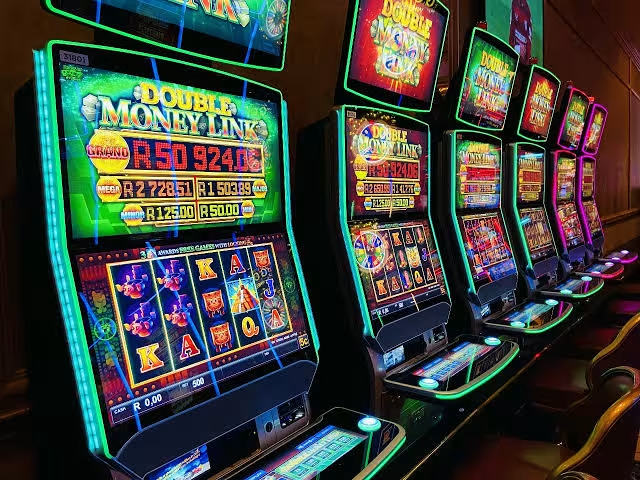
Gambling is not merely a financial activity; it is deeply rooted in human psychology and behavioral patterns. Casino games are designed to engage cognitive biases, emotional triggers, and reward systems that influence decision-making. From the thrill of uncertainty to the illusion of control, players are often driven by factors beyond rational analysis.
This article explores the psychological mechanisms behind gambling behavior, including risk perception, reward anticipation, and cognitive biases, while examining how casinos leverage these elements to enhance engagement. It also highlights the importance of awareness and discipline in maintaining a balanced and responsible approach to gaming.
Introduction: Beyond Numbers and Probability
While casino games are built on mathematical frameworks, player behavior is largely shaped by psychological factors. The interplay between risk, reward, and emotion creates a powerful environment that can influence decisions in subtle yet significant ways.
Understanding these psychological drivers is essential not only for players but also for analysts studying the broader dynamics of the gambling industry.
The Role of Reward Systems
1. Dopamine and Anticipation
Gambling activates the brain’s reward system, particularly through the release of dopamine—a neurotransmitter associated with pleasure and motivation. Interestingly, the anticipation of a potential win often generates more excitement than the win itself.
This anticipation keeps players engaged, even in the face of repeated losses.
2. Variable Rewards
Casino games operate on variable reward schedules, where wins occur unpredictably. This mechanism is highly effective in maintaining player interest, as the uncertainty creates a continuous cycle of expectation and engagement.
Cognitive Biases in Gambling
1. The Illusion of Control
Players often believe they can influence outcomes in games that are largely random. This illusion of control leads to overconfidence and increased risk-taking.
2. Gambler’s Fallacy
A common misconception is that past outcomes affect future results—for example, believing a losing streak increases the likelihood of a win. In reality, most casino games are independent events.
3. Loss Aversion
Psychologically, losses tend to have a greater emotional impact than equivalent gains. This can drive players to chase losses, often resulting in further financial setbacks.
Casino Design and Behavioral Influence
Casinos are carefully designed to maximize player engagement. Elements such as lighting, sound effects, and layout are strategically used to create an immersive environment.
Online platforms replicate these features through digital interfaces, incorporating animations and instant feedback to sustain attention.
Emotional Dynamics of Gambling
1. Excitement and Risk
The inherent uncertainty of gambling generates excitement, which can be appealing to individuals seeking thrill and stimulation.
2. Stress and Decision-Making
High-pressure situations can impair judgment, leading players to make impulsive decisions that deviate from rational strategies.
Strategies for Responsible Gambling
1. Awareness of Biases
Recognizing psychological tendencies helps players make more informed decisions and avoid common pitfalls.
2. Setting Limits
Establishing clear financial and time limits is essential for maintaining control.
3. Viewing Gambling as Entertainment
Approaching casino games as a form of entertainment rather than a source of income reduces the risk of problematic behavior.
Conclusion: The Mind Behind the Game
The psychology of gambling reveals that player behavior is influenced as much by emotion and perception as by probability. Casinos leverage these psychological factors to create engaging experiences, but awareness and discipline remain key to maintaining balance. By understanding the mental processes involved, players can approach gambling with greater clarity, making decisions that align with both their financial goals and personal well-being.
Comments