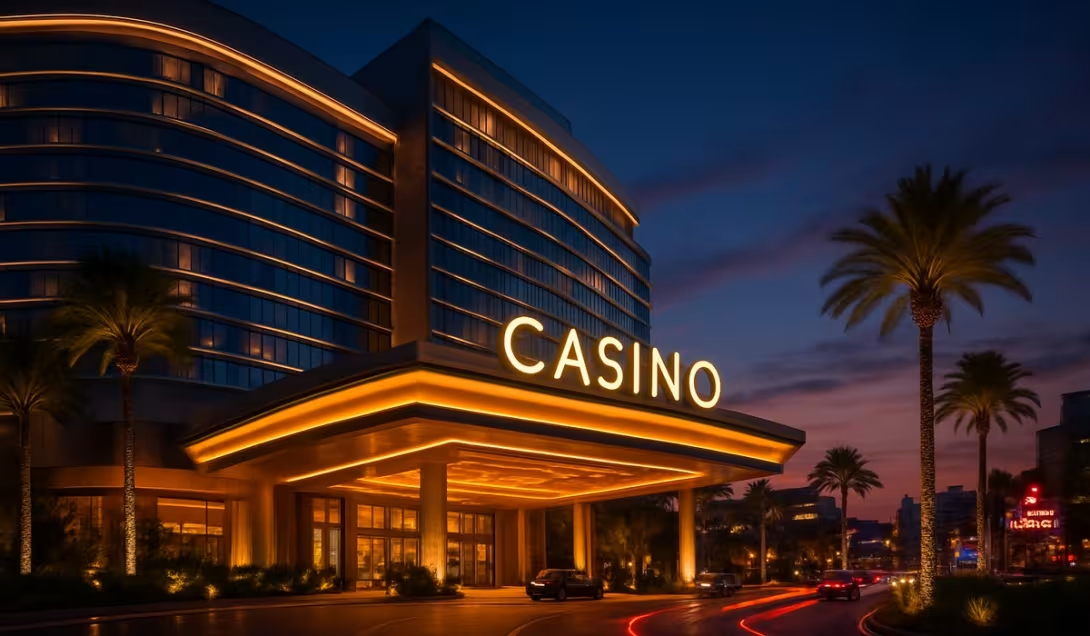
The United States is entering a new era of integrated entertainment as a wave of high-investment casino resorts launches in 2026. Moving beyond traditional gaming hubs, these developments combine luxury hospitality, advanced gaming infrastructure, fine dining, and large-scale entertainment venues into unified destination ecosystems. Backed by multi-billion-rupee-equivalent investments, the projects are reshaping regional tourism and unlocking new economic opportunities. From the Southwest to the Midwest and East Coast, these resorts reflect a strategic pivot toward experiential travel, appealing to both leisure and business segments while diversifying revenue streams beyond gaming into hospitality, conventions, and lifestyle services.
A Structural Shift in the U.S. Gaming Landscape
For decades, the American casino industry was largely concentrated in legacy markets such as Las Vegas and Atlantic City. However, regulatory liberalization and evolving consumer preferences are decentralizing the sector. New jurisdictions are approving gaming licenses, enabling developers to establish premium resorts in previously underserved regions.
This geographic diversification is not merely expansion—it represents a structural transformation. Modern casino resorts are no longer defined by gaming floors alone but by their ability to deliver immersive, multi-dimensional experiences that integrate hospitality, entertainment, and lifestyle offerings.
The Rise of Integrated Destination Resorts
The defining feature of the 2026 casino wave is the emergence of fully integrated destination resorts. These properties are designed as self-contained ecosystems where gaming is only one component of a broader value proposition.
Developers are investing heavily in non-gaming amenities, including luxury accommodations, wellness centers, live entertainment venues, and high-end retail. This strategy reflects a shift toward experience-driven consumption, where visitors prioritize convenience, variety, and premium service under one roof.
Southwest Expansion: High-Scale Gaming Meets Regional Identity
One of the most significant developments is a large-scale resort in the Southwest, representing an investment of approximately Rs 9,900 crore. Designed to replicate the scale and sophistication of Las Vegas properties, the resort features more than 3,000 gaming machines, 150 table games, and a modern sportsbook.
Beyond gaming, the property includes 800 luxury hotel rooms and a 2,000-seat entertainment arena. Its architectural design integrates regional cultural elements, creating a localized identity while maintaining global luxury standards. This development is expected to significantly boost regional tourism and reduce reliance on traditional gaming destinations.
Midwest Transformation: Lakefront Luxury and Convention Power
In the Midwest, a lakefront mega-resort is redefining the intersection of gaming and hospitality. With 2,500 rooms and a sprawling 250,000-square-foot gaming floor, the property positions itself as both a leisure and business destination.
A standout feature is its large-scale convention center capable of hosting 5,000 attendees, signaling a deliberate move to capture corporate travel and event-based revenue. Complemented by a championship golf course and spa facilities, the resort exemplifies how gaming properties are evolving into diversified economic hubs.
East Coast Innovation: Boutique Luxury and Experiential Focus
Contrasting with large-scale developments, an East Coast property is adopting a boutique luxury model. With 600 rooms, the focus is on exclusivity and personalized service rather than volume.
The resort integrates high-end dining experiences led by globally acclaimed culinary teams, alongside curated gaming options and a rooftop sportsbook. Its entertainment programming, featuring premium live performances, reflects a shift toward cultural and experiential differentiation. This model highlights the industry’s ability to cater to niche, high-value customer segments.
Economic Impact: Investment, Employment, and Regional Growth
Collectively, these projects represent investments worth tens of thousands of crores in rupee terms, generating substantial economic activity. Construction phases alone create thousands of jobs, while long-term operations support employment across hospitality, gaming, retail, and services.
Moreover, these resorts act as catalysts for regional development, attracting ancillary businesses and increasing local tax revenues. By expanding tourism beyond established hubs, they contribute to a more balanced and inclusive growth model.
Evolving Consumer Expectations in Modern Casinos
Today’s casino visitor demands far more than gaming. Integrated loyalty programs, seamless digital experiences, and personalized services are becoming standard. Sports betting has emerged as a central pillar, with advanced sportsbooks offering real-time engagement.
Dining has also undergone a transformation, with premium culinary experiences rivaling standalone fine-dining establishments. Meanwhile, wellness and recreation—spas, fitness centers, and outdoor activities—are increasingly integral to the overall offering.
Strategic Outlook: A New Competitive Frontier
The 2026 wave of casino openings underscores intensifying competition within the U.S. hospitality sector. Operators must balance capital-intensive development with sustainable revenue models, leveraging technology, customer data, and brand differentiation.
As integrated resorts become more sophisticated, the competitive edge will depend on experience design, operational efficiency, and the ability to attract diverse customer segments—from leisure travelers to corporate clients.
Conclusion: Redefining Entertainment Economics in the U.S.
The emergence of next-generation casino resorts marks a pivotal moment in the evolution of American entertainment and hospitality. By blending gaming with luxury, culture, and business infrastructure, these developments are redefining what a casino can be.
In doing so, they are not only reshaping consumer expectations but also driving regional economic transformation—positioning the industry for sustained growth in an increasingly experience-driven global economy.
Comments