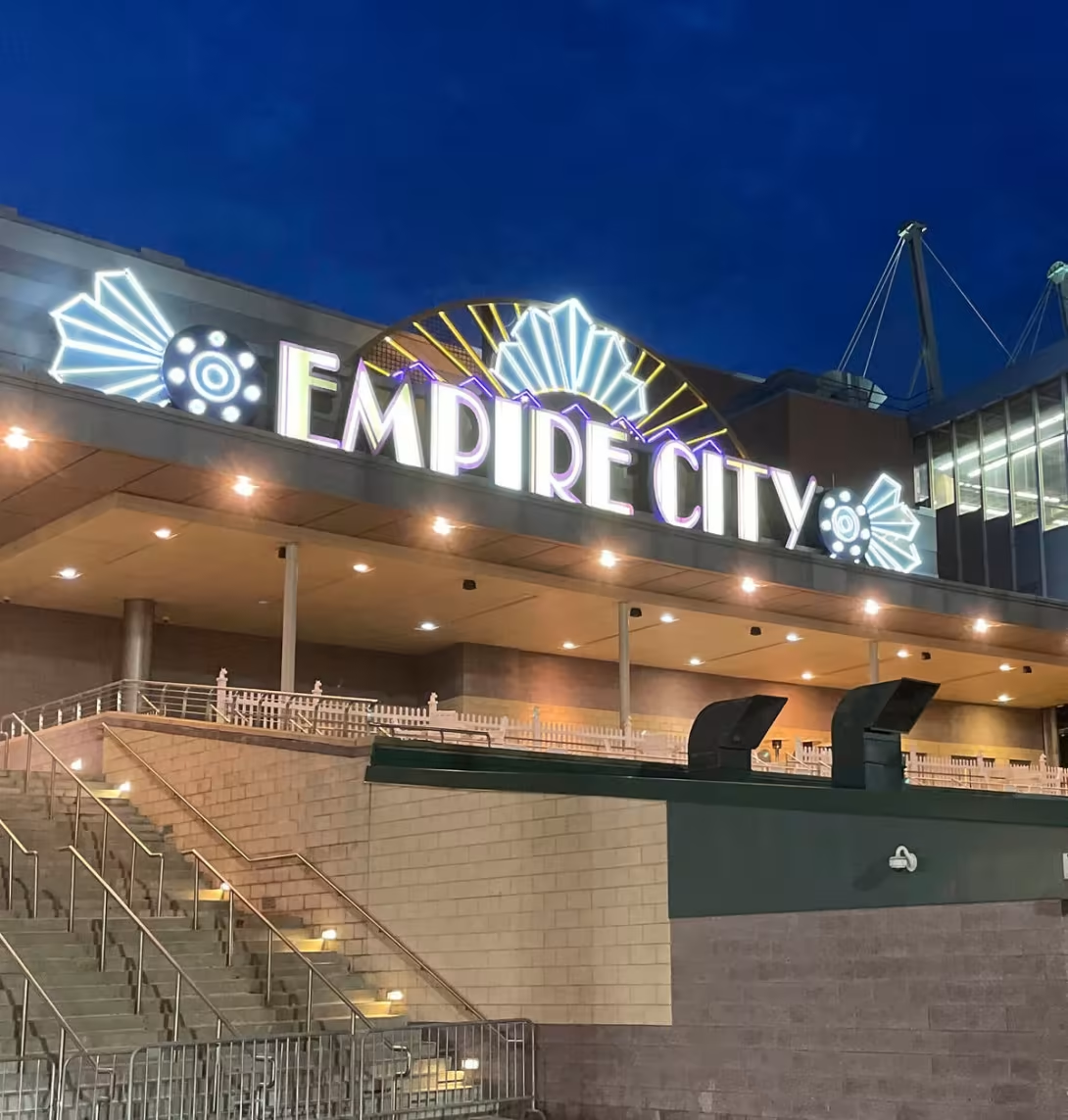
The competition for New York’s limited casino licenses has intensified, with bids from Yonkers and Queens emerging as front-runners in 2025. The state’s effort to expand its gaming sector has attracted billion-dollar proposals from developers, entertainment giants, and local stakeholders, all vying for a share of one of the most lucrative gambling markets in the United States. While the projects promise jobs, tourism, and significant tax revenue, they have also sparked debates over community impact, urban development, and responsible gaming. The decisions taken in this licensing round will shape New York’s gaming landscape for decades to come.
---
The High Stakes of New York’s Casino Licenses
New York’s downstate casino licenses are among the most sought-after in the country, with expectations that successful projects will generate billions in economic activity. State officials have positioned the initiative as part of a broader strategy to boost employment and infrastructure investment while strengthening the tax base. For developers, the opportunity represents entry into a high-density, high-spending market where gaming, dining, and entertainment can be bundled into large-scale integrated resorts.
---
Yonkers: Building on Established Foundations
Yonkers’ bid leverages its existing racetrack and video lottery operations, positioning itself as a natural contender for full-scale casino rights. Proponents argue that the transition would be seamless, with infrastructure, workforce, and customer bases already in place. By expanding into table games and high-limit areas, Yonkers aims to capture an even larger share of the regional market, potentially generating thousands of additional jobs and substantial tax contributions to the state treasury.
---
Queens: A Vision for Urban Entertainment
Queens has emerged as another strong candidate, with proposals tied to large-scale developments that emphasize more than just gaming. The vision includes integrated resorts featuring hotels, theaters, dining districts, and cultural hubs, designed to attract both tourists and local patrons. Supporters highlight the borough’s connectivity through airports and transit, positioning Queens as an international destination capable of rivaling gaming centers in Las Vegas and Atlantic City. However, the scope of these projects has also raised concerns about congestion, affordability, and the long-term impact on surrounding neighborhoods.
---
Economic Promise vs. Community Concerns
While casino developers highlight the economic benefits—ranging from job creation to multi-billion-rupee infrastructure investments—local communities remain cautious. Critics point to potential risks such as rising rents, traffic challenges, and social costs linked to gambling addiction. As the licensing process advances, state regulators are tasked with balancing these competing interests to ensure that projects deliver sustainable value without compromising community well-being.
---
Outlook: Shaping the Future of New York Gaming
The outcome of the Yonkers and Queens bids will have far-reaching consequences for New York’s gaming industry. Whichever projects secure licenses will likely set benchmarks for future urban casino developments across the United States. As regulatory reviews progress, the debate underscores a central question: how can New York unlock the economic potential of gaming while safeguarding its communities? The answer will determine whether these new casinos become engines of growth or sources of contention in the years ahead.
Comments