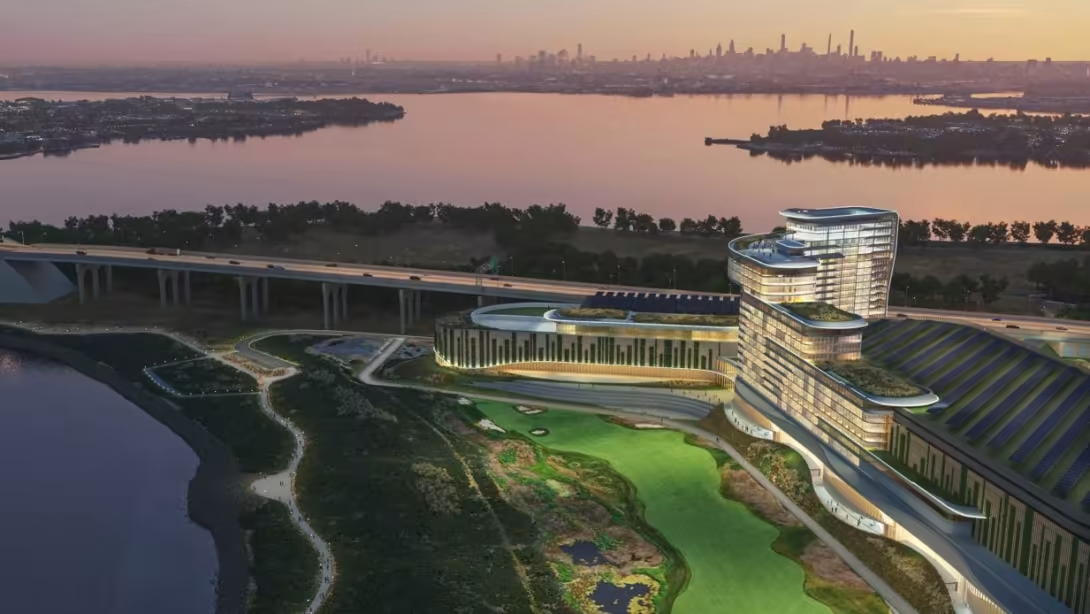
Two globally renowned architectural firms, Bjarke Ingels Group (BIG) and Kohn Pedersen Fox (KPF), are among eight contenders vying for licenses to design and develop new casinos in New York. The competition highlights the state’s focus on integrating world-class design, sustainability, and urban engagement into its expanding gaming and entertainment sector. Analysts note that the selection process emphasizes not only revenue potential but also architectural innovation, visitor experience, and community integration. With casino developments expected to generate significant employment, tourism, and economic activity, the involvement of high-profile design firms underscores the increasing importance of aesthetics and functionality in modern gaming infrastructure.
A Competitive Field for Casino Licenses
New York’s casino licensing process has attracted a diverse mix of developers, operators, and architectural firms. Among the eight shortlisted contenders, BIG and KPF stand out for their global reputations and portfolio of landmark projects.
The state aims to select proposals that combine economic viability with exceptional design quality. This approach ensures that new casinos are not only revenue-generating hubs but also urban landmarks that enhance the surrounding community and integrate seamlessly into the local landscape.
Architectural Vision and Innovation
BIG and KPF are known for their bold, innovative designs that merge functionality with striking visual appeal. Proposals from these firms are expected to emphasize sustainable construction, cutting-edge technology, and immersive visitor experiences.
Design elements likely include expansive public spaces, mixed-use facilities, and amenities that cater to both tourists and local residents. Analysts suggest that incorporating these elements can elevate the casinos from mere gaming centers to holistic entertainment destinations, attracting diverse audiences and maximizing economic impact.
Economic and Employment Impact
New casino developments in New York are projected to generate thousands of direct and indirect jobs, spanning construction, operations, hospitality, and retail sectors. In addition, they are expected to stimulate tourism, increase state and local tax revenues, and support ancillary industries such as transport and food services.
By prioritizing architectural quality, New York seeks to ensure that casinos provide long-term value beyond gaming revenue, becoming catalysts for urban renewal and economic diversification.
Community Engagement and Urban Integration
The state’s licensing framework emphasizes projects that demonstrate strong community engagement and social responsibility. Designs are evaluated not only for economic metrics but also for environmental sustainability, traffic management, and integration with public infrastructure.
Firms like BIG and KPF bring experience in creating urban spaces that blend public accessibility with commercial activity. Their involvement signals a shift toward casinos that contribute positively to cityscapes and serve as civic as well as entertainment landmarks.
Regulatory Oversight and Strategic Vision
New York’s gaming authorities maintain rigorous oversight throughout the licensing and development process, ensuring compliance with local, state, and federal regulations. Financial stability, operational expertise, and community benefits are key criteria in evaluating bids.
The inclusion of high-profile architectural firms reflects a strategic vision to combine economic growth with cultural and aesthetic enrichment. Observers believe this approach may set a benchmark for casino development across the United States, emphasizing quality, sustainability, and urban integration.
Outlook: Casinos as Urban Destinations
The selection of winning proposals will shape the future of New York’s gaming and entertainment landscape. By involving globally acclaimed design firms, the state signals its intent to create casinos that are more than gaming venues—they will serve as architectural icons, tourism magnets, and economic catalysts.
As the process unfolds, BIG and KPF’s participation highlights a broader trend: the integration of design excellence, community engagement, and operational efficiency in large-scale casino developments, reflecting the evolution of modern gaming infrastructure.
Comments