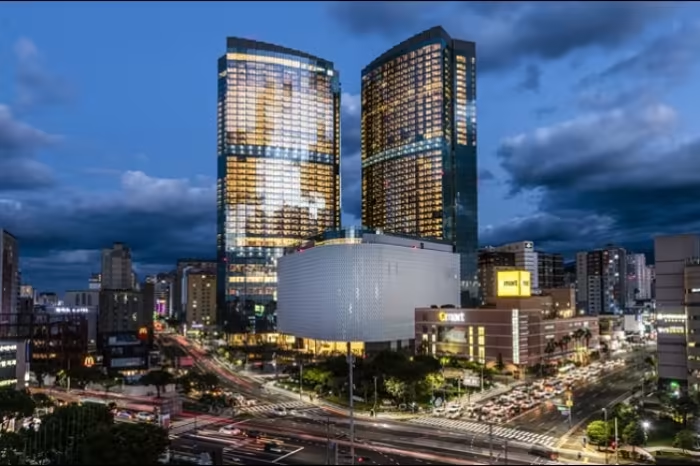
South Korea’s gaming and hospitality industry is witnessing a reshaping of market leadership, with Jeju Dream Tower positioned to overtake Paradise Co. as the nation’s largest casino operator by 2025. Buoyed by robust revenue growth, expanding international tourist arrivals, and strategic investments in its integrated resort model, Jeju Dream Tower is rapidly narrowing the gap with its long-established rival. Analysts believe the property’s diversified offerings, including luxury accommodations, entertainment, and retail, will enable it to capture a larger share of both local and foreign visitors, marking a potential shift in the country’s competitive gaming landscape.
---
Rising Competition in Korea’s Casino Industry
The Korean casino sector has long been dominated by Paradise Co., which operates multiple venues across the country. However, Jeju Dream Tower—backed by its integrated resort strategy—has rapidly emerged as a formidable challenger. Situated on Jeju Island, a prime tourism hub, the property leverages a mix of gaming floors, luxury hotels, international dining, and premium retail to attract high-spending customers. This diversified approach provides resilience against fluctuations in gaming revenue, strengthening its ability to compete with entrenched operators.
---
Tourism Boom Fuels Growth
The timing of Jeju Dream Tower’s expansion coincides with a revival of inbound tourism. South Korea’s government has been actively promoting Jeju as a global travel destination, with simplified visa processes and direct international flights boosting arrivals. As foreign tourists—particularly from China and Southeast Asia—return in large numbers, integrated resorts stand to benefit significantly. For Jeju Dream Tower, which caters heavily to international visitors, this influx could translate into record-breaking revenues in the coming year.
---
Financial Momentum and Market Outlook
Jeju Dream Tower has been steadily closing the revenue gap with Paradise Co., posting impressive quarterly growth figures. Industry observers forecast that by 2025, it could surpass Paradise in gross gaming revenue, marking a historic leadership change in South Korea’s casino industry. The resort’s strong performance underscores a broader trend: integrated resorts that combine gaming with entertainment, shopping, and hospitality are increasingly preferred by global tourists, aligning Jeju Dream Tower with international models in Las Vegas and Macau.
---
Strategic Implications for the Sector
If Jeju Dream Tower dethrones Paradise as the top casino operator, the shift will have significant implications for the South Korean market. Competitors may be compelled to reinvest in modernization and diversify their offerings to retain relevance. Furthermore, Jeju Island’s growing prominence as a casino destination could attract additional investment in infrastructure and tourism-related projects, reinforcing the island’s economic development.
---
Conclusion
The rise of Jeju Dream Tower illustrates the evolving dynamics of South Korea’s gaming and hospitality industry. With strong momentum, international tourist inflows, and a diversified resort model, it is well positioned to challenge the dominance of Paradise Co. by 2025. Should this trajectory continue, Jeju Dream Tower may not only emerge as the nation’s largest casino but also redefine how South Korea is perceived on the global gaming stage.
Comments